
Modern healthcare organisations operate in a highly intricate environment where accuracy is not only paramount for clinical excellence, but it’s increasingly crucial for a streamlined RCM process. Here, accurate patient eligibility verification ensures minimal denials, reduced payment delays, and smooth reimbursements. However, flawed, error-prone manual eligibility-checking processes, coupled with increasing patient volumes, create bottlenecks for healthcare organisations.
Evolving payer policies and other healthcare regulations further complicate matters, introducing financial risks and workflow disruptions. By implementing comprehensive verification procedures, potential healthcare risks can be avoided. Here, you will explore the value of coverage eligibility verification in developing a more efficient care experience for both patients and staff.
What is a Patient Eligibility Check?
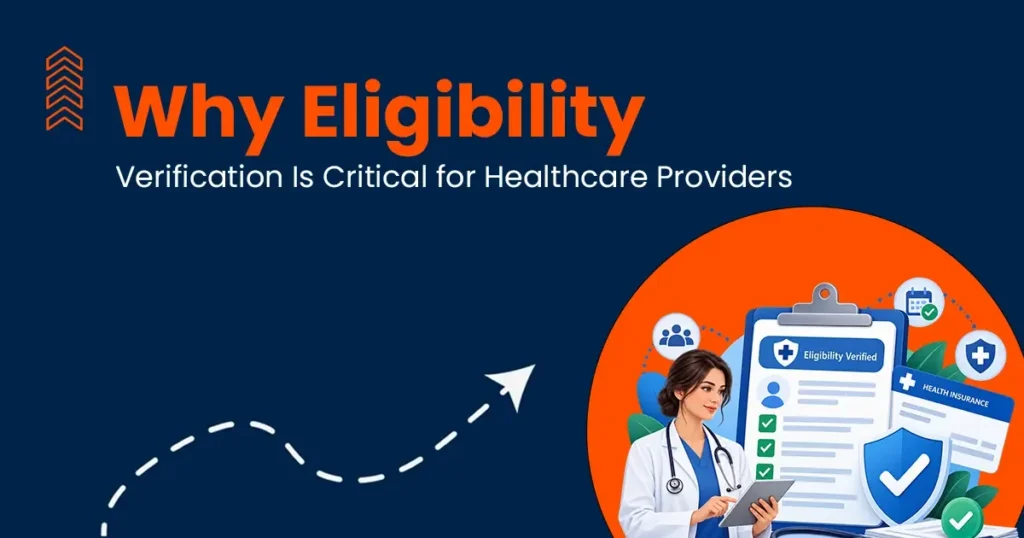
This is basically an administrative process for patients’ insurance eligibility checks to know whether the insurance coverage is valid before delivering the medical services. This procedure involves contacting the insurance partner to verify the patient’s coverage, medical benefits, co-pays, payment deductibles, and other relevant data. This process is crucial to ensure that medical providers receive undelayed payments for their services and patients receive timely medical treatment.
Why is Eligibility Verification Necessary for Medical Providers?
Coverage eligibility confirmation is integral for healthcare organisations for various operational, financial, and patient-focused reasons. Let’s explore them.
-
Reduces Claim Denials
Outdated or incorrect insurance details often lead to straight denials on the first submission. By leveraging the services of MDHelpTek, the verification process becomes smooth sailing for the providers. Efforts in the right direction can reduce rejections or denials related to inactive plans, incorrect information or no prior authorizations.
-
Minimises Staff Burden
An outsourced eligibility verification process allows internal staff to refocus on patient care responsibilities instead of investing hours in administrative tasks. Experienced billing teams can smoothly and timely chase the updated insurance information, conduct follow-ups, and proceed with claim management processes.
-
Improves Patient Satisfaction
Upfront insurance validation makes the providers more flexible and clearly conveys the financial responsibilities of patients to them. This is a more authentic way to escape surprises, ensure transparency, and build patient trust.
-
Enhances Front Desk Processes
Accuracy in complete patient details and insurance information leads to quick eligibility checks. How? By synchronising verification procedures with registration workflows, healthcare organisations not only strengthen the front-desk system but also streamline reimbursement processes.
-
Amplifies Revenue Cycle
Before time coverage eligibility confirmation allows providers to smoothly submit claims for undelayed payments on the first submission. This results in faster reimbursements to the payer with reduced billing bottlenecks, revenue cycle management and improved cash flow system.
-
Smooth Regulatory Compliance
Verification ensures all the patient’s insurance information is well aligned with the payer policies and other healthcare compliance protocols. The strong eligibility check beforehand is to avoid billing inaccuracies and ensure an additional layer of security.
-
Improves Operational Efficiency
Timely and correct coverage verification extends beyond patient care. The successful verification practices contribute to stronger operational performance. From improved financial outcomes to better resource allocation, verification becomes the foundation of organisational efficiency and reliability.
Common Challenges in Patient Eligibility Verification
Let’s find some bottlenecks in the patient eligibility validation process.
-
Evolving Payer Rules and PA Requirement Changes
Ever-changing prior authorization requirements make it difficult for providers to manage healthcare responsibilities. A significant percentage of providers complain about payer policy changes and delays in eligibility checks, impacting efficiency. Incorrect or rushed prior authorization normally leads to errors in eligibility checks, claim denials, late reimbursements and rework.
-
Outdated Methods to Validate Eligibility
Wrangling a set of outdated solutions and processes for eligibility checks plunges a healthcare provider into chaos. Almost 60% providers still use multiple tools to collect the essential patient information for claim submission. This makes entire verification susceptible to errors and tedious. The end result can be denials and patient dissatisfaction.
-
Inadequate Insurance Information
The mismatch of a patient’s record in the provider’s system and the payer’s record can lead to incomplete eligibility validation, especially when care is needed urgently. Triggering factors behind such a situation can be sudden job switches and insurance plan modifications. The major risks are claim denials, rejections, delayed billing, and other administrative-level challenges.
What is the Eligibility Verification Process?
If you outsource the verification process to a trusted partner, the workflow to verify each patient’s insurance plan is expected to be:
-
Patient Insurance Data Collection
The first step is correct patient registration to collect complete and accurate insurance details, including policy number, provider details, and patient demographics, to keep every detail accurate in the process.
-
Validation Through Insurer Portals
Experienced staff check the insurance status using the tools or direct access to payer portals. The purpose of this step is to verify the insurance coverage active status for the date of service, covered benefits, co-pays, and other deductible updates.
-
Coverage Benefits and Payment Balance
This step confirms the services covered through the provider mentioned in the network and the payments the patient owes based on the plan. The verification also includes exclusions, service-based limitations, and other authorization requirements.
-
Update Patient Record
All the details, including the patient’s coverage verification status, financial responsibilities, and other authorization needs, are clearly mentioned in the EHR or billing system. The purpose is to ensure consistency and transparency in the process.
-
Direct Connection with the Patient
Once the verification process is finished, the team thoroughly explains the expected co-pays or any problems before the patient visits. This is the way to ensure transparency.
How MDHelpTek Assists Eligibility Verification?
A transparent eligibility verification process is the foundation of every trusted medical service to patients. If the healthcare providers want to maintain operational efficiency, financial protection and patient satisfaction, MDHelpTek offers reliable support by smoothly managing eligibility verification. From real-time access to coverage portals, expert handling, accurate data entry, verification, and consistent tracking to reporting, the professionals perform everything at their best. Let’s control overhead, claim problems and other operational inefficiencies in the most transparent and effective way.